Dear Families and Carers of Year 10 Students,
Your child’s latest progress report is now available to view on the Arbor App under Report Cards. This letter is intended to help you understand the information in the report and to support discussions with your child about their progress.
Grading at Key Stage 4
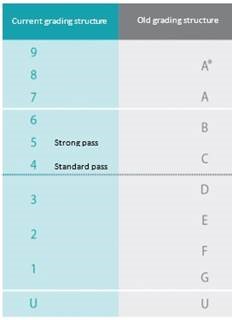
At GCSE, students are graded using the 9–1 grading system, which replaced the previous A*–U system from 2017. The table shows how grades in the current system broadly compare with the former A*–U grades.
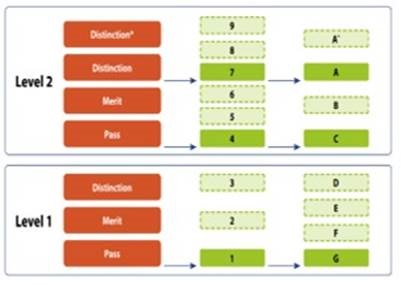
If your child is studying a BTEC or CNAT qualification, grades range from Level 2 Distinction* (L2D*) to Level 1 Pass (L1P). The accompanying chart explains the available grades and how they relate to GCSE equivalents.
Information Included in the Report
Attendance and Attitude to Learning
Regular attendance is crucial at Key Stage 4 to ensure that students do not miss essential content or skill development. The report shows your child’s current attendance percentage.
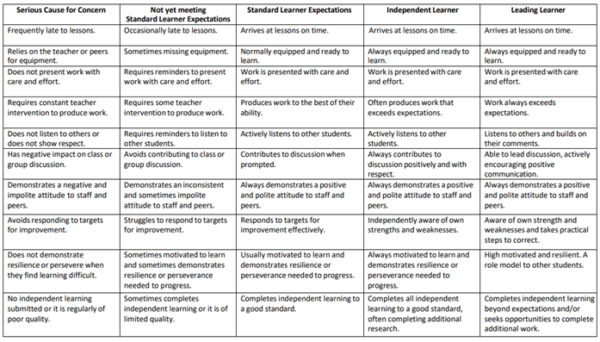
Alongside attendance, attitude to learning plays a vital role in academic progress. Students make the strongest progress when they are focused, work consistently, and respond positively to feedback. The descriptors used to assess attitude to learning are included at the end of this letter.
Target Grades
Each subject has a target grade, which is informed by:
- Fischer Family Trust (FFT20) estimates (based on students with similar academic starting points in high‑performing schools nationally), and
- Teachers’ assessments of your child’s progress in Year 10 so far.
Target grades indicate an aspirational outcome, not a maximum. Students may exceed their targets through sustained effort and effective study habits. Targets will continue to be reviewed throughout Key Stage 4.
Working at Grades (WAGs)
Working at Grades (WAGs) reflect a student’s current level of performance based on:
- Learning completed so far
- Classwork and assessments
- Trial exams (where applicable)
- The proportion of the course still to be covered
For example, although a student may achieve a high grade in a recent assessment, this does not necessarily reflect their WAG, as they have not yet studied the full course content. At this stage in Year 10, it is expected that WAGs may be lower than target grades. As students cover more material and develop their knowledge and skills, WAGs should increase over time.
WAGs are recorded using fine grading, as shown below:
| Fine Grade | Meaning |
| 5‑ | Working at the lower end of Grade 5 |
| 5 | Working securely at Grade 5 |
| 5+ | Working at the higher end of Grade 5, approaching Grade 6 |
Likely Outcome Grades
Teachers have also provided a Likely Outcome Grade, which reflects the grade your child is expected to achieve at the end of Year 11 if they continue to work at their current rate and standard. These grades may change over time as students’ progress and can move both upwards or downwards.
Supporting Further Progress
We look forward to welcoming you to the Year 10 Progress Evening on Thursday 5 March, when subject teachers will discuss your child’s work in more detail and offer advice on next steps. The timing of the evening will also enable us to provide guidance on the end‑of‑Year 10 exams and effective strategies for preparation.
In the meantime, if you have any questions about your child’s report ahead of the Progress Evening, please contact their CREW Leader or the relevant subject teacher in the first instance.
Thank you for your continued support.
Kind regards,
Sarah Nelson
Assistant Headteacher (Student Progress)